
ServicesDisability Income Insurance
Disability Income Insurance in Oxnard
Every bill you have leans on the money you earn each week. Disability income insurance replaces part of that money if an illness or injury takes you off work. We explain how these policies work, what the fine print says and how much coverage fits your life.
What disability income insurance does
It is simple at its core. If you get hurt or sick and cannot work, the policy sends you a monthly check after a waiting period. That money is yours to spend on the mortgage, the car payment or the kids' school costs.
Most people think of life insurance first. But you are far more likely to miss months of work during your career than to pass away during it. A back injury, a surgery with a long recovery or a cancer diagnosis can stop income cold while the bills keep coming.
Many California workers have some short-term help through the state disability program, but it runs for a limited time and caps what it pays. Employer plans can be thin too. We show you where those gaps are, in plain English, so you can decide whether a personal policy makes sense.
What we go over with you
- 01
Benefit amount
Policies replace a portion of your income, not all of it. We help you figure out what you actually need each month to keep the household running.
- 02
Waiting period
This is the stretch between the day you're disabled and the day checks begin, commonly 30, 90 or 180 days. Picking a longer stretch brings the premium down, so we check how many months your savings could carry you first.
- 03
Benefit period
Some policies pay for a few years. Others pay until a set age, like 65. We explain the trade-off between a shorter period and a lower cost.
- 04
Definition of disability
This is the most important line in the policy. Own-occupation coverage pays if you cannot do your specific job. Any-occupation coverage pays only if you cannot do any job you are reasonably suited for.
- 05
Riders worth knowing
These are extras you attach to the policy. One pays a partial check if you return to work part-time. Another lets your benefit keep pace with inflation during a long claim, and another lets you add to your benefit as your pay grows. We tell you which fit your work and which you can pass on.
- 06
Renewal terms
A non-cancelable policy locks in your premium and terms. A guaranteed renewable policy can't be dropped, but the rate can rise for a whole class of policyholders. We spell out which one you are looking at.
Questions about Disability Income Insurance?
Call(805) 319-7858Signs it's time to look at disability coverage
You're self-employed
No employer plan, no sick pay, no one covering your shifts. If you don't work, you don't get paid.
One income carries the family
When a household runs on one paycheck, losing it for six months can mean dipping into retirement or falling behind on the house.
Your job is physical
Field work, construction, trades and long hours on your feet raise the odds of an injury that keeps you home.
Savings would run out fast
If your rainy-day savings would cover only a month or two, a longer recovery leaves a hole. A policy fills it.
Your work coverage is limited
Group plans often cap the monthly benefit, and if your employer pays the premium, the checks may be taxable. A personal policy can sit on top of what you already have.
How getting covered works
- 1
A phone conversation
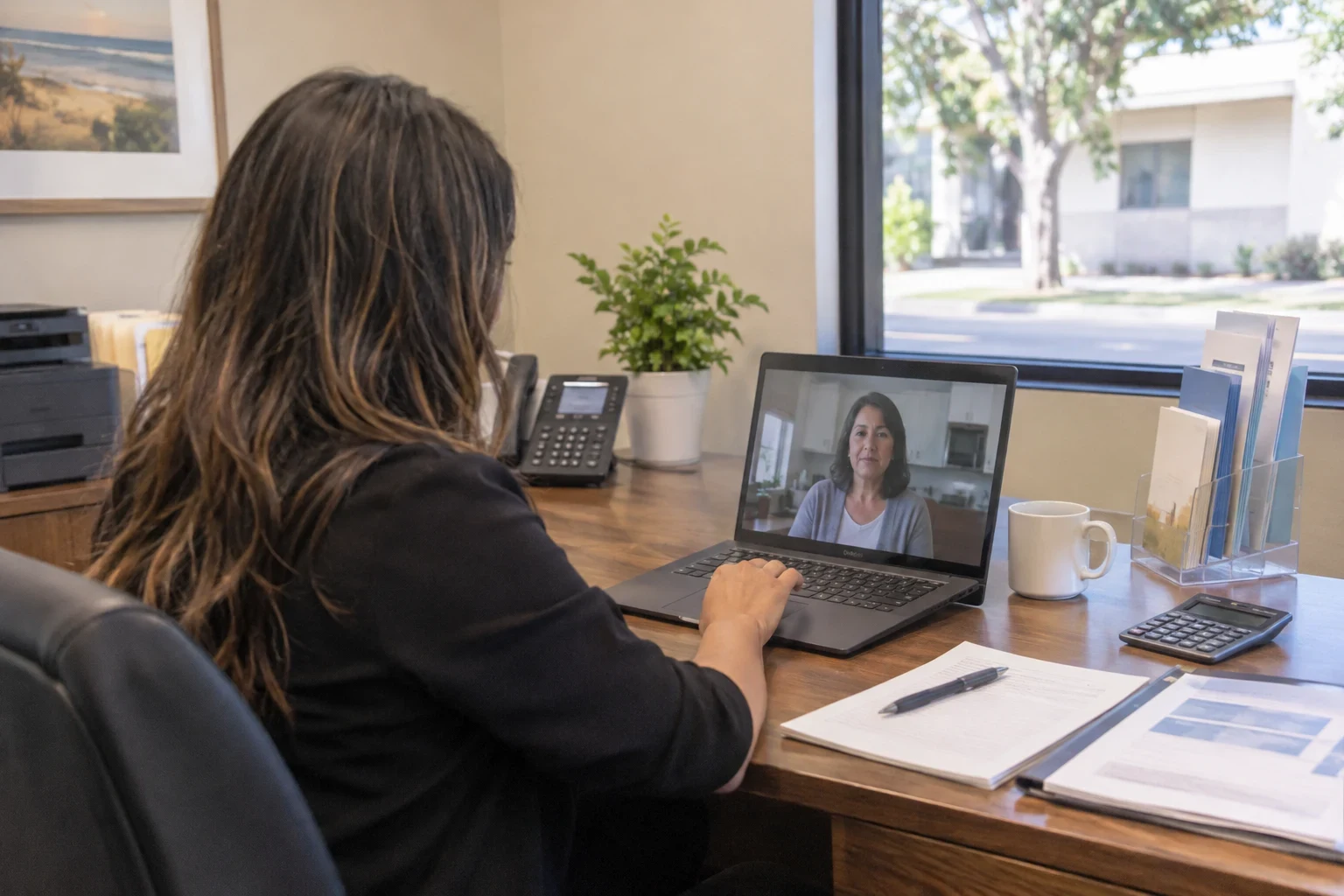
You call and talk with an agent about your job, your income and your monthly bills. We can also meet at our office or by video if that's easier.
- 2
Options side by side
We lay out a few policy choices and walk through the differences: waiting periods, benefit periods and how each one defines disability. No jargon left unexplained.
- 3
Application and underwriting
The insurance company asks about your health and usually wants proof of earnings, such as tax returns or pay stubs. Some applications also call for a brief medical exam. We walk you through each request ahead of time so nothing catches you off guard.
- 4
Going over the final policy
After approval, we read through the policy with you line by line, so you know exactly when and how it pays.
What moves the price of a policy
Disability income insurance is priced on you and the work you do. A nurse and a roofer born the same year will not see the same premium. These are the pieces that matter most.
- Your occupation
- Insurers sort jobs into risk classes. Someone at a desk usually pays less than someone running heavy equipment or climbing ladders all day.
- Age and health
- Applying younger and healthier keeps the rate down. A history of back trouble, past surgeries or a chronic condition can push the rate up or add an exclusion.
- Waiting and benefit periods
- A 90-day wait costs less than a 30-day wait. Checks that run to age 65 cost more than checks that stop after a few years.
- Benefit amount and riders
- A larger monthly check means a larger premium. Every rider you add, such as cost-of-living increases or partial disability, raises the cost as well.
Disability income insurance questions
Doesn't California state disability already cover me?
If you pay into it through your paycheck, it gives you some short-term help. But it pays for a limited time and has a weekly cap, so higher earners get far less than their normal pay. Self-employed people are often not covered unless they opted in. A personal policy can cover what the state program doesn't.
What does own-occupation mean, and do I need it?
Own-occupation means the policy pays if you can't do the work of your specific job, even if you could do some other job. It costs more than any-occupation coverage. It matters most for people with specialized skills whose income would drop sharply if they had to switch careers.
Will I owe taxes on the monthly checks?
It comes down to who paid the premium. When you pay it yourself out of money that was already taxed, the checks usually arrive tax-free. When your employer covers the premium, the checks are usually counted as taxable income. A tax professional can tell you how it works for your own return.
I work for myself. Can I still buy a policy?
You can. The insurer will want proof of what you earn, and for business owners that usually means about two years of tax returns. We tell you up front which papers to pull together so the application doesn't stall halfway.
Does it cover pregnancy or mental health?
It depends on the policy. Complications from pregnancy are often covered, and some policies limit how long they pay for mental health conditions. We point out these details before you apply, not after.
Find out what your paycheck really needs
One phone conversation will show you how far your current coverage goes and what a personal policy would add on top. An agent walks you through it in everyday words and stays on the line until your questions are answered.